Visit Route 09
Saving a baby tooth that has been hurt worse than a filling can fix.
A pulpotomy, sometimes called a baby root canal, removes the infected pulp inside the tooth and seals it, so the tooth stays in place until the permanent one is ready to come in.
Chapter 01
Signs that decay has reached past the tooth's surface
This is a different level of problem than a cavity caught early. What tends to bring a family in for this is a persistent toothache that will not settle, sensitivity to hot or cold that lingers well after the food or drink is gone, swelling around the tooth, or your child avoiding chewing on one side altogether.
A tooth that has started to darken is another sign worth mentioning to us, since it can point to what is happening underneath the surface where you cannot see it.
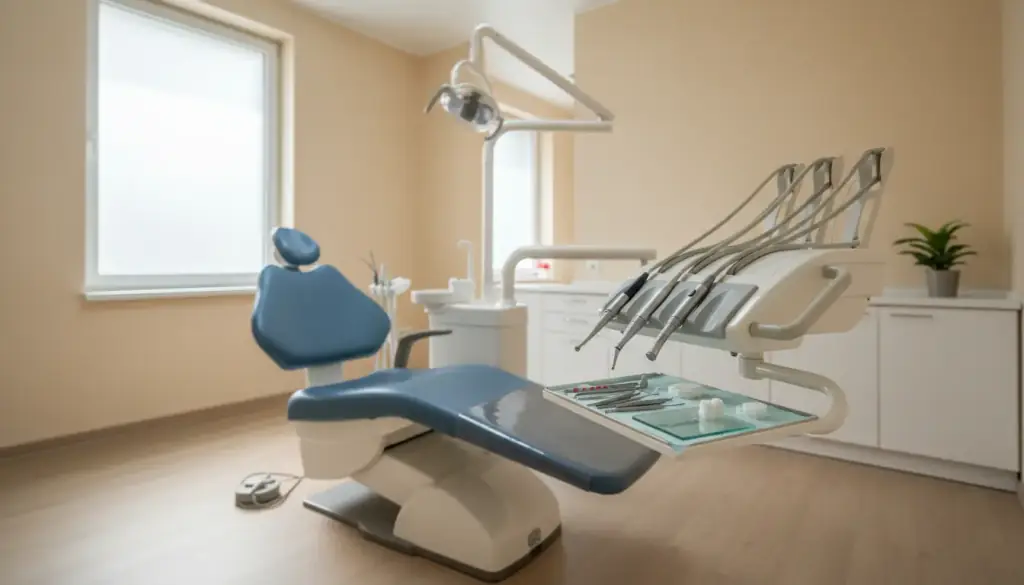
An unoccupied treatment room prepared for a pulpotomy
How the pulpotomy appointment runs at Bartlett Pediatric Dentistry
The infected pulp inside the tooth is removed, which is the part causing the pain and the swelling. The remaining space is then sealed, stopping the infection from spreading further and taking the toothache with it.
The tooth is left in place rather than pulled, because a baby tooth still has a job to do, holding its spot and letting your child chew normally, right up until the permanent tooth underneath is ready to take over.
Chapter 03
Why keeping the tooth, rather than pulling it, is the better outcome
A tooth removed early leaves a gap the permanent tooth was not planning to fill yet, which can mean crowding or shifting later. A saved tooth avoids that, and it avoids more complex treatment further down the line as well.
If your child has a toothache that has lasted more than a day or two, or you have noticed swelling near a tooth, call the Bartlett office. This is exactly the kind of thing that gets simpler the sooner it is looked at.
Bartlett Pediatric Dentistry, we file the insurance paperwork for you. Call (901) 382-1564.